
Chouette by Claire Oshetsky
Why did it take an owl baby to tell the truth about motherhood?

Hello everyone,
Thank you for joining me today for my second deep dive on The Foreign Edition. If The Wall was about what a woman discovers when the world stops demanding things from her, Chouette is about what happens when the world demands everything and she refuses to give it.
Fair warning: this one gets uncomfortable. That is entirely the point.
Now, onto the book.
Jump ahead : Deep-Dive / Self-Erasure / Body Horror / Unconditional Love
Tiny is pregnant. But she is not pregnant with a human child, no, no, no, she is pregnant with an owl baby? Yes, I know, it sounds weird, well guess what? The baby was conceived during one of her dreams. Yep. And when Chouette is born small and with broken wings, Tiny decides that she will not bend to societal expectations of motherhood and will just allow her child to live on her terms. A Nocturnal schedule? No problem. Want to eat mice? Fine. Go hunting? Great, I’ll come with you!
Her husband though? Well he has other ideas. He is horrified, to say the least and becomes obsessed with the idea of fixing Chouette. Experts, therapies, nothing is too out of reach if it can make her daughter finally feel and look “normal”.
Does it sound like a fever dream? Absolutely! A pretty uncomfortable one to say the least but it raises the question, what does motherhood actually cost women?
I DEVOURED IT!
Well, to be completely transparent, I didn’t devour it on my first try. I actually DNFed it the first time because I knew I was not in the right headspace. But boy am I glad I picked it up again a few weeks later. I read it in August 2025, almost a year ago, and I still think about it quite often and it never fails to make me feel something uncomfortably close to rage and grief at once!
Sure, you need to be patient with this story, you probably won’t feel the urgent need to press on, but it will creep up on you and you’ll most likely finish this book with a big “what the hell did I just read?” in your mind. So why did it stay with me you will ask, well buckle up because I’m going to go the intimate route!
This book is not just a fever dream about an owl baby. It is about the cage that motherhood can feel like, even when you have a partner who is present, even when you are loved. The expectations are simply not the same. The biology is not the same. And no matter how much things have changed, the weight still lands differently on women.
I am a mother. I struggle daily with wanting to remain my own person while also answering to someone else’s needs entirely. That tension is exhausting and maddening and, somehow, still beautiful. Chouette put words, or rather images, to something I had never quite been able to articulate.
And there is something incredibly moving (and beautiful, and empowering, and making me so proud) about watching generations of mothers finally say enough. Mothers who are choosing to respect their children’s needs over performing the version of motherhood society handed them. Tiny does exactly that, in the most extreme and absurd and somehow completely logical way imaginable.
That is why I still think about this book a year later, and why there are so many quotes highlighted in my copy!
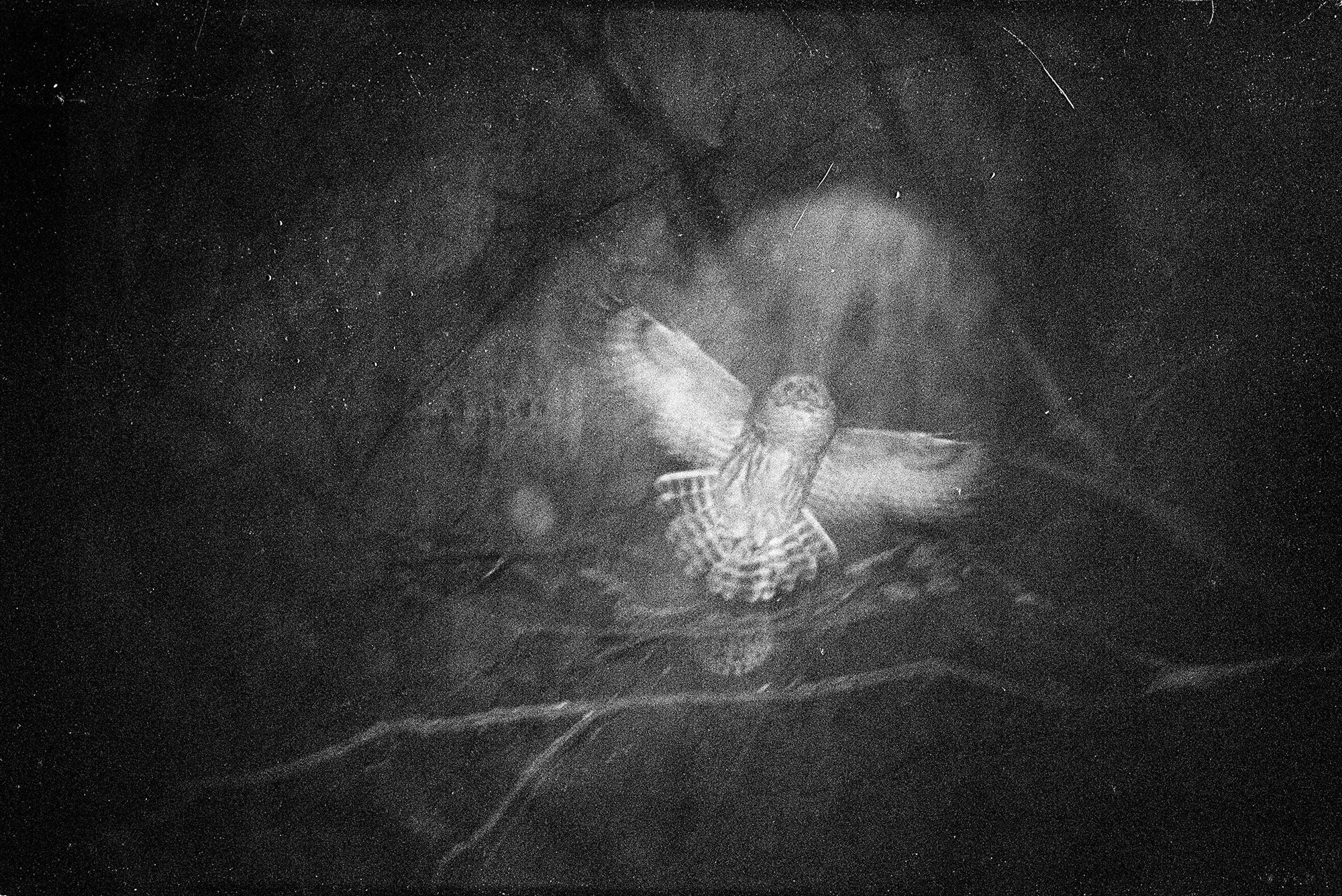
This book deserved more than a review. So here is what I got out of my reading experience.
Why did it take an owl baby to tell the truth about motherhood?
So the real question is, why do we have to resort to fables to explore motherhood in its raw and real state? What are we afraid of? Why do we have to attach it to something supernatural, or grotesque to make it more bearable?
I had to take a minute to ponder the meaning of Fable to make sure my first instinct was the right one. And while researching a definition I found this one from Merriam-Webster : “a narration intended to enforce a useful truth“. And that’s Chouette in a nutshell.
Oshetsky creates an owl-baby to make acceptable the fact that she is going to let her daughter live how she intends to, but had she cut out the fantastic side of this baby and just decided to follow the flow of her disabled daughter? I’m absolutely certain a lot of readers would have side-eyed that idea. How dares she? Refusing to perform a version of motherhood that the society expects? BLASPHEMY right?
The archetypes surrounding Tiny make this even clearer. The husband who wants to fix what cannot be fixed. The other wives performing perfect motherhood while Tiny simply doesn’t. Each one a position in an argument about what choices are available to women within the institution of motherhood.
And the fable logic runs even deeper than that, Tiny herself had a fairy tale origin. She did not arrive at motherhood from a normal life, she arrived from the wild.
I wasn’t afraid because the trees took care of me, and brooded and bent over me, and sang to me their melancholy songs, and fed me, and gave me succor, until the Bird of the Wood found me and took me home with her and taught me to trust the sound of my own voice.
The Bird of the Wood gave her a voice. The rest of the book is about what happens when the world tries to take it back. And if we take the time to read between the lines, we get an actual love letter to mothers out there, and even if delivered in a fablesque way, it’s healing.
I begin to understand the nature of my sacrifice. I’m pregnant with an owl-baby. Everyone is a little bit repelled by me. Everyone is a little bit uncomfortable. Everyone can tell that I’m about to enter a world where women sit alone in the silent corners of cafeterias, spoon-feeding their grown children, while others look away.
But before we get to the healing, let’s talk about the cost.
Self Erasure
The thread of self-erasure running through the book is both expected and inflicted on Tiny.
Society calls maternal self-erasure devotion. It calls it beautiful. It is expected from her. Why wouldn’t she want to give her whole self to her beautiful baby? Why would she want to still be her own person? Isn’t she fulfilled by taking care of her child? But then, why is she not the same as before? Why did she change so much? And, where does sacrifice end and erasure begin?
By showing this side of motherhood with a grotesque lens Oshetsky amplifies this very real side of motherhood. It seems so absurd but then again, is it?
For Tiny, it comes slowly but surely. She herself makes the decision to dedicate the rest of her existence to her child and her husband by giving up her identity.
It’s all in the past, though, because I’ve chosen to live this other kind of life, where I’m a little wife, and a little mother, and all of the magic and music has been drained right out of me. I’m small and weak and helpless
But why would she choose to lose herself? Well first of all because it is expected from her. A good mother is, according to society, a mother that decides to come last. Quite literally. Saying that she decides to come second is not enough, she places herself after her kid but also after her partner. And in Tiny’s case when it comes to her husband she isn’t really given a choice, he makes the choice for her.
What are you doing?” your father says. What kind of question is that? He can see for himself what I’m doing. I’m packing a little travel bag for you, with your diapers, and your pinkie mice, and your Le Creuset stock pot inside. “I’m getting the owl-baby ready for the trip,” I say. “We should leave by noon.” Your father’s eyes curdle until I want to crawl into a cup board and close the door behind me. “You know we can’t bring her, don’t you, sweetheart?” he says. “She’s still so small and broken. Who knows what kind of germs she’ll be exposed to? She’s frail. She’s weak. It’s our job to keep her safe.” He’s shaking his head and smiling. He’s smiling so tenderly. He says he loves me so much. He looks a little weepy. He doesn’t look in your direction. He kisses the top of my head. And then he leaves without us. I’ve been left behind.
He belittles her instincts, dismisses her voice, tries to fix Chouette behind her back. In doing so he doesn’t just override her decisions. He erases her existence in her own family.
So Oshetsky doesn’t shy away from showing how unfair the parenting dynamics can be thanks to patriarchy (hello dear old friend).
This baby will never learn to speak, or love, or look after itself. It will never learn to read or toss a football. The father can see no single thing in this child that reminds him of himself. He thinks: “This isn’t fair to me.” And then he leaves. The mother stays
The mother stays. Nobody asks what that costs her. Nobody ever does.
But, the erasure doesn’t stop at identity. It reaches the body too.
Body horror
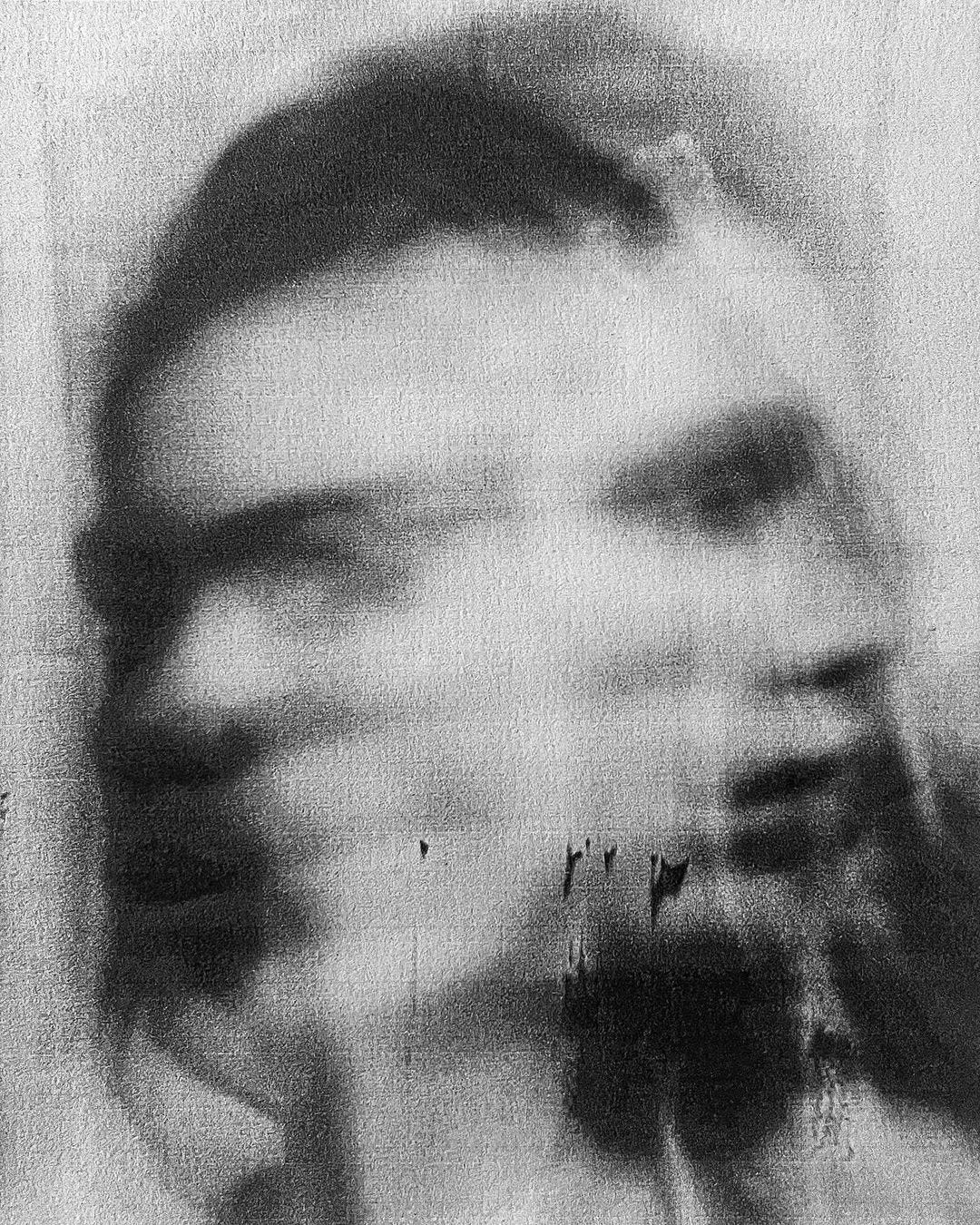
We also can clearly see the theme of Body Horror everywhere, from the physical toll of pregnancy and early motherhood, but mainly through the world’s response to Chouette’s body. But then I wondered, what if the child’s body was not the actual horror here, but the responses to it?
Her mother, Tiny, clearly doesn’t see what is so horrifying about her child. She sees it as a gift and she makes it her mission to understand her child and respect her instincts.
[...] to think that the owl-baby chose me and not some other mother who might not have had the stamina to care for such an exceptional young life. I begin to understand what a gift I’ve been given, to have been chosen for this task. The truth overwhelms me and humbles me. The birds are telling me that my life’s work, as your mother, will be to teach you how to be yourself-and to honor however much of the wild world you have in you, owl-baby-rather than mold you to be what I want you to be, or what your father wants you to be.
But then you could argue, that she is simply biased, being one of the parents. Well, think again. He makes it his purpose to fix Chouette. What if he simply can’t? Well...
He cries continuously, to distract himself from his secret plan to let you die in your sleep and then start over with a different baby
And to be completely honest when I read that line I just had to put the book down and stare at the wall for a minute. How devious people can become when they get uncomfortable. And why does it also sound not so far fetched?
Because it is the same logic applied daily to women’s bodies. And Oshetsky actually draws the parallel herself, she puts it under our nose so we can clearly see it.
“He’s broken you,” [...] “He’s clipped your wings. He’s a man. He’s a dog. He’ll never understand the monster underneath. Not the way I do.”
Chouette's body becomes every woman's body. Always something to change, to fix, to adapt, to improve. Never enough just as they are. The real horror is the entitlement. The only thing that stands between that entitlement and Chouette is her mother.
Unconditional Love
So we’ve established that Tiny gave herself away because she didn’t really know how to stand up for herself. We’ve also seen that the world tried to erase Chouette the same way it erased Tiny but what if unconditional love was the answer all along?
I’m not talking about the love that costs a mother her sleep, her body, her sanity. I’m talking about the love that teaches how to fight back.
I feel so alone. But I’m not alone. I feel the talons of my child grip me from inside. The grip is fierce [...] It doesn’t seem so bad a fate, does it? To love this child?
And at some point the husband decides to take matters into his own hands and get Chouette to a specialist that could “make her right”. So Tiny is left with no choice but to become that fierce mother, that woman that would go to any lengths to protect her child.
Women of the world: Do you know the feeling of seeing your child in terror and not being able to save her? Do you know that most terrible feeling? Are you a mother, too?
I’m sure if you are a mother, you know that sense of complete rage that we can feel when someone is trying to hurt our babies. And I am sure you know that determination, the one that gets into your body and won’t let go. And seeing Tiny finally reclaim her strength, first for Chouette and then for herself, is the most powerful thing this book does.
Oshetsky needed the fable because what she is telling us is too uncomfortable for our current society. The truth is, that when a mother (a woman!) refuses to conform and perform it is seen as a radical act. But why? Why is it not simply called living? Because haven’t we all heard : “oooh she is just being difficult” ? She is not, she’s just had enough of your shenanigans! And if that is not both depressing and uplifting then I don’t know what is.
Similar reads you might enjoy :
Nightbitch by Rachel Yoder (Read ; another mother who stops pretending, with considerably more teeth)
Her Body and Other Parties by Carmen Maria Machado (very high on my TBR)
The Bloody Chamber by Angela Carter
Room by Emma Donoghue.
So… are you going to add Chouette to your TBR? Or have you already read it? I would love to hear from you in the comments.
Until next time,
Ines
What’s weird is I know I read this one, but all my reading trackers don’t have it marked as read. But I absolutely remember relating the feral wildness of raising a free spirited child to how she felt letting her owl baby do owl baby things. And of course the husband trying to box the owl baby into a mold it wasn’t meant for. It’s a great example of how mothers give themselves up completely, so this other being can be unequivocally true to who they are, while fathers lose nothing and expect their family to fit this pre determined facade and fit AROUND them, while they remain unchanging.
Mothers are the backbone of family and society and get absolutely no recognition for it. It’s so sad we have to equate these things to magical creatures and horror stories and supernatural fantasies. Just to come to terms with the reality and trauma of being a mom in today’s society.
Great review. Your definition of a fable “a narration intended to enforce a useful truth“ makes a lot of sense. I've had similar thoughts regarding the horror genre's ability to deliver a message through a dark lens.
Yesterday, I was at a birthday party for my great niece and was talking to my niece's best friend who is a fairly new mother with a 3 year old. We known each other for a long time and when I asked about how she's doing, she talked about her identity being consumed. I know this is very common and I probably gave some reassuring platitudes for lack of anything better to say. But your review brings that conversation back.
I'm not sure if this one will make my TBR, but I can see where I'd need to be in the right frame of mind for it.